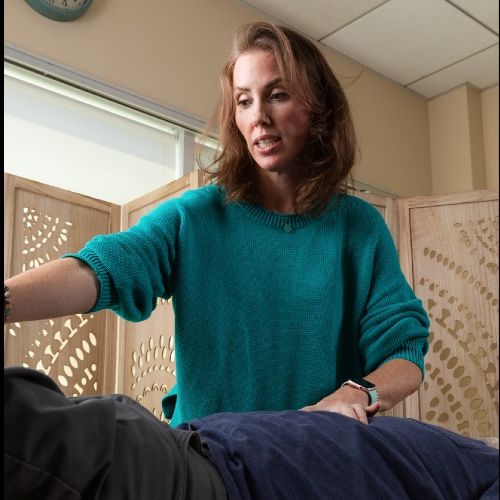
Unpacking: Trust First, Treatment Second
In this episode, we discuss a personal experience involving violent assault, injury, and subsequent surgeries. Listener discretion is advised. If these topics are difficult for you, you may wish to skip this episode or listen when you feel supported.
If you’ve had pain for years, you’ve probably been asked to summarize your whole story in minutes, and then felt the conversation rush straight to tests, protocols, and a “game plan.” That’s often where trust breaks, important details get missed, and you walk out feeling unseen.
Here, you’ll hear what changes when the first goal isn’t to solve everything, but to create enough safety for the real story to emerge. Holly shares what it’s like to carry a long medical history alongside trauma, shame, and the pressure to “hold it together” in clinical settings. Dr. Megan Steele explains why open-ended questions, uninterrupted storytelling, and clear validation can be the difference between symptom management and meaningful progress - especially with persistent pain.
You’ll come away with practical ways to:
- Prepare for appointments when your history feels complicated or hard to tell
- Ask for what you need (privacy, time, clarity) without it feeling difficult
- Notice when a provider is building trust or performing expertise
- Understand how trauma, stress, and beliefs can amplify pain over time
- Think about care as a partnership, not a performance or a test you can fail
Links to interesting things from this episode:
Transcript
Your goal on day one is to get a day two.
Holly:Ooh, that's big.
Megan:Your goal on day one with your patient, with anyone sitting across the table from you, is to gain enough trust from them that they will come back.
Intro:Welcome to Unpacking Pain, a podcast dedicated to understanding the complexities of chronic pain, what causes it, how it affects our lives, and what we can do about it.
Join doctor of physical therapy and pain science researcher Dr. Megan Steele and me, Holly Osborne, a chronic pain sufferer, as together we explore the biological, psychological and social aspects of chronic pain and create community and understanding in the process.
Trigger warning:In this episode, we discuss a personal experience involving violent assault, injury and subsequent surgeries. Listener discretion is advised. If these topics are difficult for you, you may wish to skip this episode or listen when you feel supported.
Megan:Today we're switching things up a little bit. I get to ask more of the questions today. So we're going to delve a little bit into Holly's pain journey.
Holly:Yeah, the tables are turning today. Definitely.
Megan's gonna jump in with, with science and, and her knowledge everywhere that's appropriate, as well as all the experience she's had as a hands on practitioner.
Because mine is one of dozens and dozens probably now, hundreds of, of stories, Dr. Megan, that you've taken in, you know, and really kind of taken on as a partner.
But I think today is going to be really interesting because not only is this about building community through going to a vulnerable space and really making sure that we are kind of walking the talk if we're going to, you know, ask everyone who's spending their time with us to really open themselves up and think about what makes their journey vulnerable and challenging. We want to do the same. And it's been a, it's been a long journey for me.
And so, you know, our hope is that, that, that something in today's conversation helps you feel seen, something that you can identify with, but likewise if you're a practitioner in the pain space, you know, not everybody is really prepared to have the kind of conversations that Dr. Megan has with her patients.
Not everybody really is trained or is comfortable in sort of unpacking, if you will, a patient's journey at particularly the difficult, sticky parts around trauma.
And so I, you know, I would just say take a listen to kind of how Dr. Megan sort of handles this conversation today because I think it might be instructional and very interesting on that level as well.
Megan:Thanks for mentioning that, Holly. Yeah, because there are physical therapists that are trained in pain science and it's not everyone.
And so it can be important to find the practitioner if you're somebody that's been suffering years and years of pain, that has a little bit more knowledge than your average bear in. In how to manage and how to deal with persistent pain, because it is different than acute pain.
And we don't yet have a specialty certification for persistent pain in physical therapy, but there are continuing education courses. I'm actually developing a course right now for physical therapists because we do tend to be very biased towards the musculoskeletal system.
And really, when we're talking about persistent pain, we're not thinking about the musculoskeletal system.
We're thinking about the nervous system and threat detection and some of those other things that we didn't get as much education on in physical therapy school. And I think it's, you know, people ask me every day, how can I learn more about this? Where can I learn more about it?
So finally I just said, all right, I'll just make a course and we'll go through it together. But if I were to encounter Holly as a new patient in my practice, she were just coming in for the first time. I've never seen her before.
The first question I always ask everyone is, what brings you in today?
Holly:Wow, that's. That's a big one. And you know what's interesting about that question, and I'm so curious to hear from our listeners.
I hope you'll send us an email and let us know your thoughts and your. Your feedback after this. The longer.
Here's my little theory, the longer and more circuitous your pain journey has been, the harder it is to answer that question. I don't mean to imply that any injury or any, you know, any pain that shows up in the body is necessarily simple or uncomplicated, but there.
There are degrees of that, certainly depending on how the injury or pain got there in the first place. On.
On how you've been supported in that pain and that experience, what kind of experiences you've had with doctors and practitioners before stepping into someone like Dr. Megan's office, and also how the pain has affected your life.
So I think the way that I would have answered that question, Dr. Megan, 10 years ago, even 20 years ago, would be so different than how I would answer it today, and.
Megan:Absolutely. Absolutely.
Holly:Yeah. Right. So you. You. You can see that sometimes. Do you ever notice that someone struggles in sort of how to package that up for you?
Do they kind of take a minute and go, well, you know, and they
Megan:sort of wobble around it at first, yes, absolutely.
And early in my career and with students, you see people wanting to jump in, wanting to give direction, wanting to interrupt and help you and you know, throw you a lifeline of like, well, what hurts the most and where is it? And da da, da, da.
Over time and as I've gotten more into the literature, I've realized, no, my job is to sit back and shut up because whatever the most important thing to you is, is what you're going to tell me about in this moment.
And I'm going to get so much more information if I ask an open ended question like I just did, as opposed to a close ended question that's like, where does it hurt? How much does it hurt? Better, worse, the same, those types of things. So almost all of my questioning is very open ended and.
And then I shut the ass off,
Holly:which is a skill unto itself for a lot of people.
Megan:It's very difficult. Yes. That's one of the hardest parts of my job because you might have noticed, I love to talk.
Holly:Me too.
Megan:What brings you in today? What's going on? Those are my go tos because it's a wealth of information. So just for example, how would you answer that today?
Like you say it would been different 10 years ago. That's fine. It would have been different five years ago. That's fine. What would you say today?
Holly:You know, I think today I would say I'm having ongoing issues with my shoulder and which is affecting other parts of my body, primarily my neck, my back, and you know, my. Pretty much my whole right arm.
And I would say I've been through so many different protocols and I've had eight surgeries or nine, depending on how I've had a surgeon classify this additional procedure I had as another surgery, which is funny to me. It was a manipulation under general anesthesia. By the way. You consider that surgery because he kind of.
Megan:That is, anytime you go under anesthesia, I can't. I kind of consider that a procedure. Yeah.
Holly:Okay. Yeah, exactly. So anyway, eight and a half and you know, so I probably would start there. I would say, I would rattle off some of my basic stats.
I would say original injury was an acute trauma in 98. I've had eight surgeries and a procedure and countless physical therapy since then. I've had injection. So I, I start rattling like that. Right, okay.
So, so would you. Is it the right thing then to just let me keep rattling?
Or do you, you know, do you kind of want to stop and get into something a little bit deeper before I start Giving you the, you know, the bio.
Megan:That's a really good question. And there is some research on this. So what we find is that it takes someone about eight minutes to tell their story.
It seems like you're talking for a long time and sometimes people get a little self conscious and they start to feel uncomfortable. And certainly practitioners feel uncomfortable.
And we know that based on the evidence that tells us that they tend to interrupt within the first 30 seconds and they stop whatever you were going to say and they start in with, let me direct you, let's go to where I want to go. Because in part, that's what we're taught. We're taught that we direct the conversation, we're driving the ship and you're just along for the ride.
But what I found and what, where the research is going tends to tell us that if you shut up, you will get so much more information than you will, than you would if you were to interrupt somebody and decide that you know better and that you're going to drive the ship.
So if you came into me and you said, I'm here for shoulder problems, I've, it's been an ongoing thing for many years for me and I've been dealing with it and it's affecting my life.
I would just say, okay, and I would just be sometimes jotting down a note or two, but I would mostly be maintaining eye contact with you because I would want you to know that I'm listening. And that's one really important way that I can start to establish a connection with you
Holly:that is music to my ears and that, and especially I'm hoping that, you know, you're, you're kind of starting a revolution. Dr. Megan.
Because it is really easy for the patient then to, to shut up and get derailed and sort of buy into the narrative that's being given back to us from the practitioner.
And, and I think that almost truncates or it hamstrings or it cuts off your opportunity at the beginning of that relationship to really understand for both of you, the patient and the practitioner to understand what you're really up against. Because it's not is it is. You've helped us understand through so many dimensions at this point.
Point, it's very rarely just a straightforward injury that there's, there's a heck of a lot else going on. There's a belief system, there's, you know, maybe resistance going on.
There may be some psychological issues around depression, sadness, maybe anxiety is at play. Those things are all going to be helpers or barriers along the recovery road. But if you've only, you know, if. If the person stops me at. Okay, great.
So. So eight surgeries and last one was, okay, great. So it's now, holly, where, you know, let's take a look at, you know, your range of motion today.
Megan:Right. And then we jump right into your objective exam.
And part of that happens because we work in these systems, and a lot of physical therapists work in systems that are owned by, like. What's that called? What's blackrock called?
Holly:Oh, like there's like a conglomerate of. They sort of all fall under an umbrella company.
Megan:Right. Or they're owned by a private equity company. Or a private equity company. Exactly. So, you know, you have a productivity standard to meet.
You have a certain number of minutes that you're able to spend with your patient. So a lot of that is not dictated by the physical therapists themselves. And this is true across the medical profession.
And that's very difficult for patients to. When you hear things, you know, you. You'll often hear them say things like, oh, my doctor spent five minutes with me.
Holly:Right.
Megan:And yes, that's because they have 15 minutes total. And then all day long they have these 15 minute blocks of time that they don't get to decide.
Holly:Yeah.
Megan:So part of that is a systemic problem that we have a really hard time with that.
And then because I know as a physical therapist, okay, if I have an hour to do this initial evaluation, which is a luxury in the industry at this point, for an initial evaluation, I have 15 minutes for your subjective exam. I have 15 minutes for your objective exam. I need to do some treatment with you. Whether that's manual exercise, neurored, whatever it is.
I need to get you on a home program and I need to get you scheduled and out the door within those 60 minutes, 55 minutes or something like that, maybe I get five minutes to start on my chart. Right? Yeah. So, yeah, part of it is that. And the other part of it is we really want to show competence. We want to show expertise.
We want you to know that we recognize what this is. I've seen this before. I'm the expert in the room.
But really what the literature shows us is that if I jump to a conclusion and I tell you, oh, I know what this is, within a few minutes, you actually have less trust in me. And you, you, you. That's not what patients want.
Even though it sounds like, oh, you know, I can show you that I'm the expert within the first 10 minutes. People don't tend to buy into that terribly well. It doesn't really help that therapeutic relationship terribly. Well, that makes sense.
Holly:Well, yeah, go ahead.
Megan:What you're saying, especially with someone that has had a long history.
Holly:That's what I think. Oh. Or exactly. Great minds think alike. Yeah.
I was like, maybe for a first timer who's just, you know, kind of got a twisted ankle and they're in there, it's not gonna, you know, it doesn't need to be that deep. But
Megan:yeah. And I started teaching this week at Mount St. Mary's where I teach Doctor of Physical Therapy students.
And the first thing I do before our pain science class together is ask them what are some of the challenges they've seen in the clinic.
Because at this point point they're in their third year, they've been out on their clinical rotations, and they've struggled, you know, and so I love this. I love catching them at this time because they're like, wait a minute. It's not all like the book, you know, what. What the heck.
And so we talk about the things that make people difficult, that make people with persistent pain challenging, and it can be very deskilling as a practitioner, especially a new practitioner. So one of the students asked me, you know, what do we do with those people who are like, I've done that before. I'm not going to do that again.
Been there, done that, that kind of thing. And I said, we'll talk about it.
Holly:A lot of bridges to cross.
Megan:But, yeah, one of the first things I said was, you know, I see people very commonly after, you know, they've seen six different practitioners or nine or 12 or 15 or whatever it is, and I say, great, that's good news for me because we already know what didn't work, so I don't have to do that again.
Holly:Right.
Megan:Or. Which. Which doesn't mean I'm not going to do that ever. But that's not going to be the place I start.
Because if you're going to say, I've been through six rounds of this and you're telling me we're going to start at the same place again, you know, either you didn't listen to me or you don't know what you're doing.
Holly:Yeah, that's very intuitive. You're so right. And there's a lot of trust either established or. Or not in that first session. Right. I mean, I, I think that absolutely.
People don't necessarily know what the credentials mean walking into physical therapy office. Right. They. They see that the person, you know, has. Has the right to be there. They're a, you know, they're a licensed practitioner.
But beyond that, it's, it's not like in business where we kind of jump on LinkedIn and we look and see, you know, okay, this person was at this company with this role. That means that they've run an engineering team. Okay, this person did it, you know, so I think it's a, it's a bit of a leap of faith.
And you're right that it, it can, for the certain patient feel validating to immediately hear solutions or hear the game plan. But if this is your third, fourth rodeo, that is, that falls short, you know, quite frankly, it's just not going to work. So.
Yeah, I really, I appreciate that.
I have been lucky enough to have hour long intake sessions and still never, I still didn't feel like I was getting the right information out because I was either holding back or embarrassed. Just, you know, so it was like I would offer up something and then kind of not go all the way there in.
Megan:Yeah.
Holly:Jaring.
Megan:Yeah. And that's, that's something I find in new grads as well, is they'll ask the first question, but they won't ask the follow up question.
Holly:Yes.
Megan:So my, after you rattled off your whole history to me, which I don't think it's rattling off, I think it's like a data gold mine of information.
Holly:Right.
Megan:So after you told me all your history of your surgeries and all of that, I would say, okay, so what happened, however many years ago when this
Holly:all began, and you're asking me for
Megan:real, if you're open to that?
Holly:Okay, I didn't know you were giving an example of what comes next. The original injury was a traumatic posterior dislocation.
I was defending myself in an assault and I brought my arm around in a move that I think we were taught in the sixth grade or something about bringing your arm around and trying to clap an assailant's ear with your open palm because it could stun the heck out of someone.
And I had just, I, you know, the whole kind of scenario of what happened to me, as is the case with a lot of traumatic situations, it's slightly blurry.
I can't, I can't sort of piece it back together exactly frame for frame, but I had the ability to sort of rotate back and bring my arm around and try to essentially kind of stun or, you know, clap the side of this person's head or ear as best I could.
And this person was prepared and was ready and eager to fight back and essentially met my force with his force and brought the weight of his body, which was twice the size of mine, all the way to bear in, essentially wrenching my arm backward as hard as he possibly could. And that created what you see in basketball sometimes when someone goes up for a dunk, like a running, you know, dunk, and they're.
They're in the air, and an opposing player actually, with all the force of their body and all their velocity, meets that arm and they collapse, and on the athlete with the ball who's trying to dunk, they can actually end up with a posterior dislocation. Megan, can you let our listeners know the difference between an anterior and a posterior dislocation and why a posterior is so gnarly?
Megan:Yes, absolutely. So anterior dislocation. You know, I like to joke about depending on the person, it can happen if you are cleaning your bottom in the bathroom.
Not really, but, yeah, anterior dislocation, by far the most common. It's very, very common. Usually it'll happen with a fall on an outstretched arm.
You fall behind you, you don't have a lot of musculature in the front of your shoulder, and so very, very commonly you will dislocate anteriorly.
A posterior dislocation is very rare in part because you have your rotator cuff muscles back there, and so you have your shoulder blade as well, your scapula. So it's quite a rare occurrence. And it takes a tremendous amount of force to dislocate posteriorly.
Holly:Thank you for explaining that. And I'll pause for a moment to. To offer this for whatever it's worth.
For a lot of years, I blamed myself entirely for the situation that occurred to me. And I thought, well, if I were smarter, I wouldn't have been in that situation. If I were smarter, I would have had someone with me.
If I were smarter, I wouldn't have fought back. Wow. And it was my fault.
And that's part of the reason that I wasn't really sharing about this and to later learn through practitioners like yourself, Dr. Megan, the level of force that it takes to cause a posterior dislocation really clarified for me what happened to me and that this was not my fault. This wasn't just, you know, I was trying to defend myself, and oops, our arms bumped, you know, and it slipped out the back. This.
This is a very deliberate, violent act. And I. And I just, you know, I think we. We had a trigger warning that came up on text at the beginning of this program.
And I just, you know, want to remind People that if any. If Megan and I venture into any part of this conversation, it feels uncomfortable for you, you know, please take a pause.
Please take care of yourself as we have this conversation and others. That goes for anything else we're talking about, too. Sometimes our original injury is going to have trauma attached to it, whether it.
There's violence involved or not. It could be, you know, a car accident that was not the fault of either party or any party.
It could be, you know, someone's staircase in their home and you went down the back. Right. So. But that can all create a trauma.
I think the important thing is to not move past that original trauma without really making sure that you understand what happened to you. It can be very tempting to want to move through it and move past it and say, I'm good. You know, I'm good with that part.
But I found that the more I tried to move past it and just put it into a box up on the shelf, the more it kind of came back to haunt me.
Megan:Yeah, absolutely. And thank you so much for sharing your story in this moment.
I mean that I think we should just take a moment and recognize how hard that is and how brave you are for doing that.
I mean, that is not an insignificant thing to talk about, to be open about, and especially some of the judgment that you are placing on yourself for what happened to you. If you had told me that in the clinic, I would stop what I was doing. I would put my pen down and I would say, wow, I'm so sorry that happened to you.
Holly:And then I would start tearing up like I am right now.
Megan:That's okay. Yeah.
Holly:That's very powerful. Yeah.
Megan:Because it's. It's very easy for us as practitioners to get uncomfortable.
And I think whether or not you shared that story to that depth that you just shared it right now, it would be easy for me as a practitioner to say, okay, got it.
Holly:All right.
Megan:And then what else? So activities of daily living. How are you doing with sleep? How are you doing with overhead? How are you doing?
You know, it's like, I just want to get to the next thing, especially if, you know, I'm in a big open gym. I see there are other people observing me, especially if you're on the table and you start to tear up.
You know, there's a joke about, like, physical therapists being pain and torturers. That's like, don't cry, don't cry, don't cry. You know?
But me having worked in persistent pain for so long, I'm like, that's that's where the gold mine is, the thing that causes you to tear up. That tells me there's something there.
And typically, like you said, when there's something that's gone on for a long time, there is a traumatic experience experience connected to it. Because pain has a lot to do with memory and the. I remember the things that are important to me. I remember the things that keep me safe.
And so especially a traumatic experience where my safety was not secure.
My nervous system is going to say, let's hold on to this one deeply so that in case we're ever in a situation that similar to this, we will be able to protect ourselves.
Holly:That is so enlightening. I mean, just because someone like myself or someone listening has experienced trauma doesn't mean you understand how it works in the mind.
And I'm so grateful for you to be explaining this, Dr. Megan, because it really is enlightening to be able to understand, number one, why our brain would hold on to something like this. And number two, why that's not necessarily a bad thing if it's channeled and handled with care, you know, that it.
That it can be there for the right reasons. But, you know, and you've. You've hit on something which I think is really interesting.
At least I. I think part of the journey, which is that I wasn't ready to tell anybody how I got hurt at first. Not my family, not my.
I had just graduated college, and I didn't want my parents thinking I'd had such bad judgment or that I put myself into such a bad situation. And that lie extended to my surgeon. So I told him how I was originally injured. I lied.
I told the same story that I told my parents, which is that I fell down a flight of stairs and that I don't even know how that lie came to mind. It was just sort of what flew forward. And I said, I was at a barbecue. We were rough housing and drinking.
I went down a flight of stairs and my arm dislocated. My parents didn't know it was posterior. They didn't know it was the worst pain I'd ever experienced in my life.
That the ride to the emergency room was absolutely indescribable as the muscles and everything was contracting, you know, in and out around the shoulder. Experience I had being put under conscious sedation at the ER because that's the only way they.
They're going to be able to get that, you know, unlocked out of your arm. I just put all that aside, and I was like, I can almost See it in my mind now.
I can see myself at a barbecue having, you know, one extra beer, and I am roughhousing with a friend, and boom, we go down the stairs. I mean, it's like you tell yourself and you say something enough times and you almost start to.
Megan:Sure, absolutely.
Holly:Yeah. And so I think it's kind of interesting that my first surgeon didn't question that at all, that he, you know, kind of bought that.
And the interesting thing is that it wasn't until the second surgeon came along years later who I. Who became sort of an angel to me in this whole process. And I'm going to go ahead and name check him. His name is Dr. Marc Safran.
And just saying his name makes me emotional. Just Stanford now. He was at UCSF at the time here in California.
And Marc, as I am allowed to call him now, Marc, very compassionately listened to my Faux story about what happened to my shoulder. So I'd already had two surgeries at this point point, and the shoulder was getting worse.
So now I'm here I am with another surgeon, and he's starting my intake kind of from scratch. Holly, what brings you in today? How did this injury occur?
And I told him the story, and he was looking at the information in my file, and he was looking at the X rays, he's looking at the surgery reports, and then looking back, and he said, I. I want to say something that I'm concerned could make you feel very uncomfortable, but I want you to trust me. Me, I really hope that I can earn your trust. Have you told me everything there is to know about how you hurt your shoulder?
Megan:Wow, I just got, like, goosebumps.
Holly:Oh, God. God bless him.
He said, the reason I'm asking, and I'm not trying to put you on the spot here, Holly, the reason I'm asking is because the injury you describe isn't especially consistent with what I'm seeing on these X rays and how it was treated operatively. Is there anything else that you'd feel comfortable sharing with me? This is a safe space.
Megan:That is a brilliant thing to say. That is the perfect. Let's just say that again. Is there anything else you'd feel comfortable sharing with me today? This is a safe space.
Those are two huge things, because I can say no, and no means no. There's nothing else, or no means I don't feel comfortable sharing that with you. And also knowing that this is a safe space. And so just perfect.
Brilliant. I assume that this was like, in a room by yourselves.
Holly:It Was. And interestingly, Stanford, where he is now as a teaching hospital.
So every meeting thereafter that I had with Marc when he transferred to Stanford was always with at least a couple fellows in the room. So I'm really glad that that initial conversation, the big reveal, didn't happen in that moment.
But, you know, honestly, people who've been through multiple surgeries will understand what I mean when I say you kind of hit a wall and your defenses go down and something that you wouldn't have been willing to say or do or try five years prior, suddenly you're like, okay, Doc, here's the true story.
Megan:Give it to me. Yep.
And also, I think it's just important to note right now, if people are in the similar situation and they're not feeling comfortable sharing with fellows or residents or medical students in the room, you can ask them to leave. You can say, I. I'd like to have a private conversation here with my surgeon, doctor, nurse, whomever. You're not required. It's.
It's a voluntary situation. They're supposed to ask you. Like in many teaching hospitals, they kind of just get used to it and so they forget to ask you.
But you can say, I'd prefer not to have those people in here in this moment. Oh, wow.
Holly:Yeah, that's. That's really good. I'm glad you mentioned that because just to.
Oftentimes, we see the doctor or the physical therapist as sort of a mini celebrity or icon or idol or guy. You know, it's like, hey there, you know, this is a Stanford surgeon. I'm not gonna, you know, tell him what to do. Saffron also then did.
Did something else very important, which was I had not articulated. I had not told the truth to anyone yet at this point. And when I told him what happened, it was all through the lens of what I had done wrong.
I said, so I brought my arm around to defend myself and, you know, and it came into contact with, you know, his arm came down and next thing I knew, I was on the.
On the ground writhing in pain and my arm was at an odd angle and he was writing and nodding and he looked up at me and he paused and he said, you were assaulted. And I wasn't sure if I was.
Megan:Whoa. Yeah, to name it.
Holly:Assaulted. But how was I assaulted when I tried to fight back? And he said, you are at. At the time, I was 108 pounds.
He said, you're 108 pound woman who suffered a posterior dislocation. I can tell you right now, based on what we're talking about you were assaulted. And. But he. He didn't go too far with it.
He wasn't there to, you know, lecture me or you listen like me. It wasn't about that. It was truly. He was making eye contact. There was compassion in his face, and he was there to see me and validate me.
And that was power.
Megan:Yes, that is. There's so much power in that.
I say to my students, you know, like I say, we have these short blocks of time, and we're just trying to get it all in, and we're trying to make sure we write it all down. And your goal on day one is to get a day two.
Holly:Ooh, that's big.
Megan:Your goal on day one with your patient, with anyone sitting across the table from you, is to gain enough trust from them that they will come back. Right.
Holly:When you say, that's amazing. Yeah, I didn't think about that.
Megan:When you think about how hard it is to go to physical therapy, tell your story, start all over again, the whole thing, I want you to know that this is a safe enough space that I believe you, that I understand you. I would love for you to come back.
I may not get it figured out in this session, and it's very unlikely that I will because this has been going on for so long, and there are probably a lot of different pieces to this puzzle. But I would love for. I would love to work with you. I'd love to be on this journey with you and see if I can help you.
Holly:That is something that I think is so important and disarming for the patient who's coming in to know that this is a partnership. Actually, the way you're putting that, Dr. Megan really makes it sound like we're in something together here now.
Megan:Absolutely. Absolutely.
Because if I'm going to try to convince you to do something different, to make a change, a lot of what we do in physical therapy is behavior change. And I also ask my students this every year. I say, you know, everybody raise your hand who loves to be told what to do.
And these are graduate students, so they're, like, early to mid-20s. They're, like, looking at me like, how dare you even suggest.
Holly:Right?
Megan:And I like to say, you know, it's on a spectrum, right? Like my husband, if he catches a whiff of somebody telling him what to do, he's out the door versus me. I'm like, I'll listen.
You know, like, if it suits me, I might do what you're telling me to do. But really, if. If I'm going to suggest to you that you might change something about the way that you're moving. Living, thinking, sleeping, anything.
We've gotta be in this together. This has to be a shared decision making. And, you know, part of that has to do with the fact that adults just don't like to be told what to do. Right.
Holly:So true. Yeah, I think, I think you, you make such a good point there that, you know, honestly, it's, it's really something that we have to let go of.
A lot of attachments is what I've kind of found is one of the names of the game in addressing pain and partnering with someone and get it is like attachment to, you know, the, the, the supposed protection that you have, like attachment version of the story you're telling is it protects you or, you know, attachment to a certain way of doing things. Like, you know. Well, you know, my last physical therapist always started off with heat.
So why aren't you starting with heat or whatever it is like, we get the path to these things and then we reach that point again where we're sort of worn down. You know, if we're the patient, we're like, okay, uncle, you know, yeah, please have your, have your way with me.
Megan:Yeah, and, and that's a really good point too. And so one of the next questions I often ask people is, so what do you think is going on?
Which is also challenging for people that feel like I need to be the expert. I have an ego about fixing you. Like, I've never fixed it anybody. I've never healed anybody.
I've helped get stuff out of the way so the healing could happen. But I don't have these magical wizard hands, you know, I just. There. None of us do. And so what, what do you think is going on?
Gives me again, a wealth of information and it helps me to know where you are now so that I can meet you there.
Holly:Yeah, I could see where that would be really important because hopefully what you're getting there is not just a biomechanical like, well, what I think is going on is that, you know, my knee has this thing where every time I turn to the left. Right, okay, so that's important.
But wouldn't it be cool if your patient also said, and I notice it most when I'm the most stressed out, or it always happens when I can least afford to be in pain or I, you know, does that might give you just a sliver of a clue like, okay, there's other things going on here. There's lifestyle and stress and, you know.
Megan:Absolutely. And then you hear other interesting things, like, well, my mother always told me that if I injure my back, that was it.
You know, like, we have bad backs in our family and once you go down that road, you don't come back and it's all downhill from here. And so you really get to start to understand some of the beliefs, systems around pain.
And some people feel like there's a certain level of suffering that they need to endure, especially if it was a traumatic injury or they feel some level of guilt about it or some shame or embarrassment. And you know, you, you just get so much more information if somebody says or if you ask, you know, what, what do you think is going on here?
What do you think is contributing? You might hear things like, you say, like, well, I notice it so much when I'm stressed. I only have this at work.
When I have time off with my kids, I don't have it. You know, you just, you get to learn a lot more about them. Yeah.
Holly:Because it's, it's, by the time it becomes persistent pain, it's just not going to be straightforward anymore. Huh.
Megan:Right. And you know, that's your opportunity to really plant seeds.
It's funny, when students learn or when I learned pain neuroscience education, which is very popular in physical therapy these days, which has to do with the fact that I'm not explaining to you about your anatomy and physiology anymore.
I'm explaining to you about the physiology of pain and how the pain signals happen and how they get amplified and how things tend to work in persistent pain as compared to non persistent pain. And, and so we thought, oh my gosh, this is going to be the panacea every day.
And he's just going to love hearing about nociceptors and central sensitization and da da da, da, da, da, da, da da. And then what we find is it's been around for about 20 years and persistent pain rates remain pretty pretty much the same.
Holly:Oh, interesting.
Megan:So it's not the panacea that we thought it was. And it's likely in part because we're, we're talking to someone on a cognitive level.
And the more and more research that comes out about persistent pain tells us that much of it is held in our subconscious brain. And so by talking about it on a conscious level, we're not dealing with the area where the brain is or where the pain is. Excuse me.
Pain science education has been shown to do some things like decrease catastrophizing and increase my ability to cope with my Pain, but it doesn't really allow me to overcome the physical sensations.
Holly:You know, that makes sense, actually, because I'm thinking back to. So I've had a total of four different surgeons, all really different style, bedside manner and, and way of explaining things.
And I think there is a fine line there. When you have information that you can, as a patient, you can repeat back and you can explain back to someone, that's validating, that helps me make sense of the pain. The pain doesn't feel like.
It's just this nebulous, never to be nailed down thing, you know, that there's, you know, it's sort of like we, we like a name for, you know, don't just tell me I have an earache. You know, tell, tell me the name. Like, that's so.
Megan:Absolutely. Yeah. I. There are some people who absolutely need a diagnosis.
Holly:Yes, yes.
Megan:And, and there is research on this as well, that if I give you a more broad, generalized diagnosis, it improves your outcome.
So if I were to say, oh, you have an L5 disc herniation that's 8 millimeters, you're much more likely to seek a second opinion, to seek an MRI and to seek out surgery versus if I, I label it as an acute bout of non specific low back pain, then you go, okay, I can deal with that.
Holly:Oh, interesting.
So it feels more dire when it's kind of a gnarly, you know, sort of statement of like you hear some word that just some certain medical words sound bad, like, you know, sure.
Megan:Herniation, degeneration, absolutely. All of those things bring to mind absolute terror for some people.
Holly:Right? Yeah. Yeah, I can totally see that. You know, and I, I think the thing is that it is a journey.
Not everybody is going to be able to speak their full truth. You know, even. Even when you meet a Dr. Megan or a Dr. Marc Safran, you, as Megan mentioned earlier, you may not be fully ready.
You might say, no, I can't, you know, I can't expand on that. I.
Megan:That is absolutely fine.
Holly:That is so. Okay. I think the important thing is to not shove things down, right?
To, to let them come up for you and be gentle with yourself and allow for the opportunity at some point for your truth and your story, you know, to be shared. You know, here's the thing is that, you know, we, we are gonna chip away at our trauma bit by bit, right?
It's not gonna come out like, you know, a dirty penny that you find in the water and then you, you know, you clean it and polish it up and, wow, look at that now. And I'm just ready to go spend this. I'll just drop that into the next coin op machine.
That penny just continues to kind of lie at the bottom of your drawer and collect dust and get scratched. And, you know, it's there. It doesn't go away.
It's kind of like the tag, Megan, that you said, you know, when, when, like, is that interoception or something where you're aware of something, the tag is on your shirt, but a tag in
Megan:the back of your shirt. Yeah.
And sometimes I talk about it like, you know, if you've swept it under the rug and then it's just like a lump under the rug, you know, and every time you kind of like trip over it a little bit. A little bit. You trip over it a little bit.
And then typically, you know, it gets a little bit bigger because you're sweeping more stuff under it a little bit bigger, and then all of a sudden you're tripping over it and then you go down, Right? And sometimes that happens. And sometimes it just like catches you, Catches you, catches you every time. Catch a toe on it, that kind of thing.
I'll tell you a story about somebody that I saw. We'll call her Callie. So she came to me and she's been having persistence, constant pain.
And she's one of those people that, you know, you get that outline of the body when you go to physical therapy. She sort of circled all the parts of the body.
Holly:As in everything hurts stem to stern. Yep.
Megan:Oh, boy, oh, boy. And so I said, okay, great, let's. Let's delve in here. I did the same thing I did with you. What's going on?
Don't know what's been going on for a hundred years now. You know, she's 47 years old, still goes to work every day, but is just in excruciating pain all the time. And I said, when did this start?
Don't really remember there. You know, I've always had it. Have three kids, all of that, you know, okay. Totally fine.
Holly:Yeah.
Megan:And then because I consider myself an integrated physical therapist, I talk about like, tell me about your diet. Tell me about your sleep habits. Oh, I don't sleep very well. You know, I live in a very chaotic house and all of my food comes through a window.
Holly:Okay.
Megan:I said, huh, Like a drive through window? And she said, yes. And I said, okay. Is it, you know, difficulty making meals, you know, stress, timing, what, what, what?
Why is it that all your food comes through a Window. And she said, I'm not allowed in my kitchen.
Holly:Oh.
Megan:And I said, okay, why is that? And she said, it's just how my house runs. I'm not allowed in my kitchen right now. It's. It's just how it is at my house.
Holly:Curious.
Megan:Okay.
Holly:Okay.
Megan:I could tell by her body language, the way that she was talking. She just really was not interested to delve deeper there with me on this day.
And so we did a traditional physical therapy evaluation and treatment and then treatment plan. We talked about, could she make better choices at those windows when she's at windows?
And we talked about the window she goes to the most and what other options might be there.
And just talked about, you know, the fact that there are some foods that increase inflammation in your body, which tends to increase pain, and there are foods that decrease inflammation in your body. Decreases pain, sure. Again, my goal is to get a day two. I'm not trying to get to the bottom of it on day one.
I'm not trying to unpack everything on day one. I want to give you a couple of things that you can try.
Holly:I'm going to see you in a week.
Megan:We'll see how it goes. And over time, you know, eventually her story did come out, and she had a similar trauma to what you had while she was pregnant with her first child.
And, you know, it.
Ultimately we got there, and that was contributing to a lot of her pelvic pain that was then affecting the way that she moved and up and down the chain and all of that. But I didn't get that on day one, and I didn't need that on day one.
She had to establish a level of trust with me, and she had to say, okay, I'm safe enough with this person. She. You know, there are certain people also that probably like your surgeon when you recognize, okay, there's. There's more pieces to this.
That person needs a private room. We're going to be in a private room every time the door is going to be open.
Holly:Okay.
Megan:Unless they tell me otherwise.
Holly:Right.
Megan:So that they feel comfortable, but they're not in the big open gym with everybody shouting and laughing and dropping weights and things like that.
Holly:Right, right, right.
Megan:Yeah. So that's kind of how I would approach somebody like Callie, is to say, great, thank you for telling me. Thank you for telling me where you are.
I'm happy to meet you there, and then we can go on a journey together. If you choose. If you choose not to, we can do what I know to do as a traditional physical therapist.
We'll say, I'll say we've got these stretches, we've got this manual work that I'll do with you. I've got some exercises I want to give to you.
And then once we hit a plateau, I might say there are some other things that we can talk about if you're open to it and if you're not, you're not. Yeah, okay.
Holly:You know, this is really a hopeful conversation because I think it's opening up a new. Gosh. What do I want to say? It's, this is funnily enough, not in our toolkit right now. This is not in the average.
Like the exchange of information between a sufferer and a practitioner doesn't always go like this. And so this is a really powerful kind of, for me, very hopeful conversation because it's, it's widening the aperture. Right.
We're sort of, we're kind of widening our view out a little bit to say we've got to make room for this and, and both parties have to come to the table.
Megan:Absolutely.
Holly:By the way, if you are with a practitioner who can't go there, won't go there, I promise you they're not the only practitioner in your insurance company's playbook, like take the time.
And the other thing that I think is, is really interesting that you're pointing out, Dr. Megan, is that just because you're not ready to talk about what's difficult today doesn't mean you won't be ready six months from now or six weeks or whatever it takes. Right.
This is a, a moving, this is a moving journey and there are going to be points along the trajectory where you are less okay with your trauma and other times where life is just clicking along and it's not bothering you that much.
And I'll give you a little example which is about every, every surgery that I was having was to try to kind of fix and tinker with this, you know, basically broken down car that it a. I needed a shoulder replacement but was too young to get one. They weren't, surgeons weren't willing to completely do that on A, on a 20 something at the time.
And so that's why I had so many subsequent surgeries. And it was, you know, like having a car that really needs to be replaced. We need to junk this car, but I don't have the money for that right now.
And so I'm just going to replace the tires, I'm going to put in a new transmission, I'm going to put on new wiper blades and just Hope I can get this thing over the line until I've got enough money to buy a new car.
So it was like that we were trying to buy time with my shoulder and all of these sort of surgeries that I was having along the way to kind of like, you know, try to put Humpty Dumpty back together before it was time to have it replaced was actually just really kind of causing more frustration and more pain and more difficulty. And I was moving around the world. I was in London for a while, and then I was in New York for a while. So I couldn't even stay with one surgeon.
I reached a point where pain started ratcheting up again. It was like I had come off of my last surgery a couple years prior. Pain was tick, tick, ticking up again. It was affecting work for me.
I was excruciating pain all day in front of my laptop. And I was referred to a surgeon who. I'm not even going to bother saying who it is at the time. He's still practicing.
And I saw him and said, you know, I was told to ask you if, if it was time to replace my shoulder. Like now I'm 33 or whatever. Can, can we do this already? And he said, I. I need you to take me back through.
You've had at this point, six surgeries or whatever it was. And he asked me very specifically. It was like this forensic breakdown of what year and what hospital and what procedure.
And I was really struggling with pain and depression at this point. And I could not freaking tell you which surgery was which year. It was like the OATS procedure was, I think, in, in. No, wait, was that in 01.
n your chart that that was in:I just felt like I was on the witness stand or something. And it was like, you know, answer all his questions. I couldn't get the dates right. And he's just standing there with a clipboard. Broke down in tears.
Well, guess what? Later I read his after visit summary and it was cruel. I don't think I was going to see it.
It said questioning or something about questionable patient history. Something about the fact that my dates and my stories didn't add up. And then mentioned patient lost her emotional control
Megan:and ooh, that makes me like, that makes my blood boil.
Holly:And should be referred to psych services.
Megan:Oof.
Holly:Oh, Dr. Megan I mean, when I read this, I was angry and so sad all at once. I. Oh, my gosh, I felt like kind of. I felt like a piece of trash.
It was sort of like, look, I, you know, probably got myself into this injury in the first place. I hadn't fully dealt with that or reckoned with, you know, the original trauma. You know, I sort of deserve this. I made my bed. I have to lie in it.
I can't even get my date straight. I'm screwing up at work. You know, it's hard to, you know, and you just start rattling and it just kind of becomes this big pile.
Megan:And I don't remember what I had for breakfast. Like, come on.
Holly:Sake. I. Honest to God, it was like, I wasn't the surgeon. You read the reports. Like, you tell me you're at wisdom,
Megan:looking at the piece of paper.
Holly:Exactly right. The Spanish inquisition, you know, all of a sudden, like, do you want to treat me or do you want to put, like a flashlight in my face?
So, you know, I think the thing is that I. I want to say, and, you know, hopefully, you know, you're Hearing it from Dr. Megan, you're hearing it from me. You got to get out of that situation. You. You do not stick around for that practitioner. That is not your surgeon. That's not your physical therapist.
That is not even your. That's. That's not even someone who should be delivering your mail. Okay? Because that. That. They don't get it. You're. You're wasting time. So if you.
If you find yourself at certain moments where you have strength and you were able to tell a doctor about your accident or your trauma without tearing up or without becoming red in the face, and then six months later, it made you cry. Okay. You know, that, that is. You're going to go up and down in this journey, give yourself that permission.
And when you're with the right practitioner, like a Dr. Megan or Dr. Saffran, they're going to give you the permission and ebb and flow with you also.
Megan:Absolutely. Yeah. And there is actually some research about how you can best advocate for yourself in a situation.
And there's a group at University of Indiana that are doing research on this, which I agree with the argument that you should not have to do. We should not have to coach patients to deal with medical professional, professionals, biases. We should be dealing with those.
But this is the world we live in. So here's some advice about how to prepare yourself when you are communicating with the healthcare team.
Clarify the things that are important to you before you go in so that you can communicate it clearly. Okay. How are those things linked to your goals is number two. And how are your goals connected to important people in your life?
For example, I cannot get down on the floor. I want to be able to get down on the floor to play with my grandchildren, Something like that.
Because for those burnt out, exhausted practitioners, that maybe they've got something else going on that they shouldn't have even been in clinic that day. That helps them to see you as a human being. Yeah, that helps. Go ahead.
Holly:Oh, no, I was just saying yes, but it was a long yes. Yeah.
Megan:That helps them to see you're not a number, you're not a chart, you're not a form. And it. It really helps cement to them. Okay. This person is somebody to someone. Right. They're not just the person who's having this issue.
They are a human with a family, with children, with grandchildren, with siblings, with brother, whatever. Yeah. And. And sometimes that's what we need to shake us out of our, like, oh, my gosh, this is what I do every day.
But not everybody does this or is exposed to this or has ever seen this before. And I will admit to you that I'm not perfect, and I've not always been that practitioner. I used to not allow people to say 10 out of 10 pain.
I used to say, oh, well, is it really 10 out of 10? Because if it is, then I have to call an ambulance because that's emergency room level pain. Just like that. I will say it.
Yeah, I think about that and I. It's so cringe. I'm so embarrassed. Like, I want to call all those people and just be like, I'm so sorry I ever said that to you. What an asshole.
Oh, no.
What I would like to go back and say is, wow, if you're telling me 10 out of 10 pain, I'm hearing from you that probably people have dismissed your pain in the past. And so you need to really let me know that this is real and significant. Significant, what you're going through.
Holly:God bless you, Dr. Megan.
Megan:Yes.
Holly:Oh, my gosh, that's. That's huge. I mean, how compassionate that is, that you can take that number, which you know, truly is an exaggeration, or to, you know, they.
They would be writhing on the floor, unable to get the words out right. You'd be calling 911, 10 out of 10 pain. And yet, you know, you. You can take that and see around that, like, kind of around the bend. Like, you.
You can kind of see around that corner. To know that that's about emphasizing, like, see me, see me, please. Like, know that. And that it's 10 out of 10 affecting me.
It's 10 out of 10 hard for me.
Megan:Yes. Yeah. I had a student actually last week say to me, yeah, I had this ankle injury, and it was like, it wasn't major.
It was like 3 out of 10 pain, but it was like 7 out of 10 affecting my world.
Holly:Ooh, drop that mic on that. That's.
Megan:That's what I said. I was like, I'm gonna start asking that question is, so how is it affecting your life? How is it affecting your world? Yes.
You're telling me a number which is just some dumb, arbitrary way that we've learned to. Or we decided we're going to quantify an unquantifiable thing, Right. So that we can measure change. But yeah, really, pain is.
Is not something that you can just put on a 0 to 10 scale and say, this is what it is. And that, that tells you almost nothing.
Holly:It's. That's so true. And I've. I've actually heard one interesting.
When people who are chronic migraine sufferers, when they draw themselves having a migraine, that's so interesting because that also tells you the flavor of pain they were having. Like, was it. And sometimes I like, in my pain to like, music or sound like it's very high pitched and very sharp and staccato. Today it's like.
Or other times the pain feels low and dull. Like, you know, those drums in an orchestra that have the fuzzy, you know, the, the drumsticks or thing is like, boom, boom, boom, boom. Yeah, yeah.
And it's, it's like a lower, slower throb.
And you know, depending on you and your makeup and where you are in your life, you're going to deal with the high pitch differently than the days you feel the bomb. And sometimes that's also helpful to say too, you know, what flavor is your pain today? What color is your pain today?
Is your head in a vice or is your head underneath the hoof of a horse? Or it that, you know, a dagger through it? Like, all of those explain pain differently. And so we got to do our part too.
Megan:Right?
Holly:And, you know, help dimensionalize that.
Megan:Absolutely. I mean, I used to work in an area of LA that had a large Korean population, and they would use the word sour a lot to describe their pain. Okay. Yeah.
And so, like, there are so many ways to describe pain. And, you know, just because I don't understand sour pain I, I can kind of imagine it. Like, I imagine myself puckering around like a sour.
Like it's sort of sharp. But, you know, I, I asked people to use more and we had translators there.
It was a great place for a little while, you know, can you describe that more for me? Like, how is that, you know, like, what, what else, what other words could you use and describe? Eventually we got there, but like, oh, that's really.
Yeah, we're really trying to put into words and to put into numbers experiences that are so different for all of us and so impactful and so important. And I think, just like you were saying, Holly, like, sometimes you're not ready for that and that's okay.
But when you are and you find the right practitioner, it makes all the difference.
Holly:It, it's, it's really everything because there is a block there that is not going to move itself. Right. And, and like, like Megan said, if you're not ready, that's okay. But when you, this isn't really optional.
If you're, if you're going through cycles, right.
If you're ending up back where you started, if you're on surgery number five or what, whatever the deal is, if this is recurring in your life, why not open yourself up to a different conversation? I promise you it's not going to hurt any worse than your pain on its worst day.
Megan:Yeah.
My opinion on that is if you're continuing to have recurrences, it may be that you've been doing more symptom management than addressing the root cause. Cause of the issue. So if I'm just managing the symptoms, then I'm not really truly getting down to what the root cause is.
Holly:Yeah, I think root cause.
And let's be brave enough to go there and, and please trust that when you do get to that moment where you're willing to talk about it, there is so much that opens up for you at that moment. Right. When you, when you. With the right practitioner, like Dr. Megan or Dr. Saffron.
And then also I think we'll probably have a future episode where we can talk about what does that actually mean to heal from trauma. Right there. So people say, am I just supposed to like, tell my story? And then I'm good?
Like, do I just like cry and have like a goodwill hunting moment with Robin Williams? Like then, then I'm.
Megan:Then it's over. Yeah.
Holly:Right. And, you know, and the truth is that it's going to be different for, for everybody and that there are many roads in and out of trauma and.
And, you know, difficult kind of memory suppression. I'll. I'll say that something that had a huge impact on my life was this book - Louise Hay, "You Can Heal Your Life."
I've used all other kinds of, you know, techniques from EMDR to even, you know, medicinal mushrooms under the care of a doctor. You know, so there's a lot of ways to come at this.
Don't suggest that you, you know, that you're going to be sitting on a shrink's couch and doing talk therapy, which for some is powerful and very, very wise investment in yourself. For other people, that isn't going to work. And please just know there are a lot of roads to take and.
And some of them are incredibly rewarding and will surprise the heck out of you.
Megan:Yes, absolutely. And I do want to give the disclaimer that as a physical therapist who does treat mind body, that I'm not a psychologist or a psychiatrist.
And when things are big and heavy and traumatic and there's a lot of unpacking happening, I will not go there with somebody unless there is a mental health professional on board. I. I can't send somebody out after opening things up like you say, and they have the big release cry and
Holly:then say, all right, well, see you next week. That's so true.
In fact, it was Dr. Safran who then referred me into therapy after that big day when he was like, actually, what happened to you was this. And it's called this. And it was. And he made sure I did not leave his office before his assistant printed out other Stanford, you know, psychiatrists.
Megan:Right.
Holly:Like, I go talk to him. So you're right. Just to.
Megan:As compared to that other doctor saying, refer to psychology, you never would have gone based on that recommendation.
Holly:Yeah, give me a break. Like, patient lost their emotions. Yeah, yeah.
Megan:You, You.
Holly:You're darn right. I just.
Megan:Where did you lose them?
Holly:Exactly?
Megan:Oh, man.
Holly:Well, I thank you so much for making a safe space for this conversation. It's been so rewarding, and I know we'll only just continue to kind of open up these pathways and.
Megan:Yeah. Thank you so much for your bravery and your honesty and your openness and your vulnerability.
I know that a lot people have experienced similar situations, and now they hope maybe they can open up a little bit more because you did here today.
Holly:Oh, I appreciate. Well, thanks for. You make it easy, really. I mean, you're. You're the right person. So thanks. And we're here for you also.
Please send us, like we said at the beginning of the episode. If you want to send in an anecdote, send in a story, send in a question, even an idea for a show or something, you know, send it.
Send it our way, because this is a big topic that we that we explored today. So no, we're not just going to cut the conversation off here. Let us know. We'll keep it going.
Outro:Thank you so much for listening to this episode.
We appreciate your tuning in and being part of the Unpacking Pain experience. If this episode helped you, please share it with others. Leave us a review or let us know directly.
You can get in touch at unpackingpain@gmail.com and we'd love to hear your thoughts or questions, your stories, even topics that you'd like us to cover in a future episode. Together, we're fostering community as we shed light on the realities of living with chronic pain and discover new ways forward.